Malaysia, India Reaffirm Comprehensive Strategic Partnership During Modi’s Official Visit
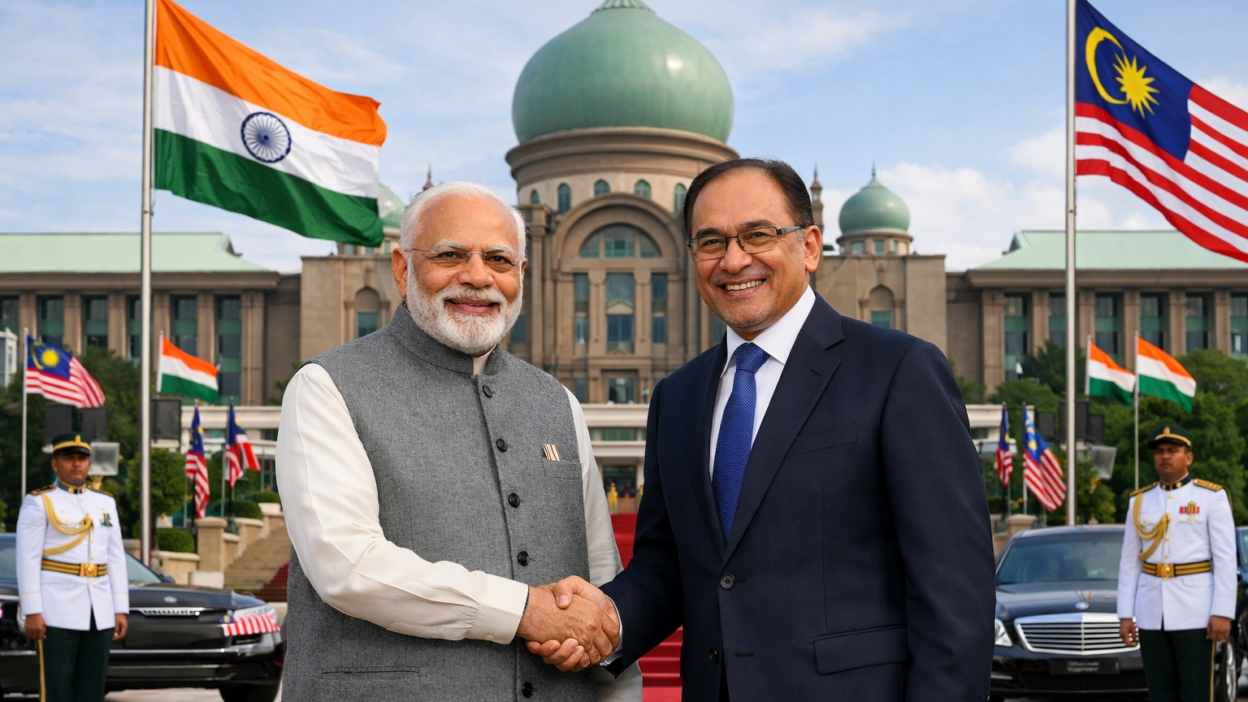
Putrajaya, Feb 8, 2026 — Malaysia and India reaffirmed their Comprehensive Strategic Partnership (CSP) during the official visit of Indian Prime Minister Narendra Modi to Malaysia from 7–8 February 2026, marking a significant step forward in bilateral ties spanning diplomacy, trade, security, and people-to-people cooperation.
Prime Minister Modi visited Malaysia at the invitation of Prime Minister Datuk Seri Anwar Ibrahim, reflecting the long-standing friendship and deep civilisational links between the two nations. Malaysia and India established diplomatic relations in 1957 and elevated bilateral ties to a Comprehensive Strategic Partnership in August 2024.
During the visit, Prime Minister Modi was accorded an official welcoming ceremony at Perdana Putra, Putrajaya, followed by bilateral talks held in a warm and cordial atmosphere. Both leaders discussed a wide range of issues, including political cooperation, defence and maritime security, trade and investment, the digital economy, energy, education, healthcare, tourism, as well as regional and global developments.
Trade, Investment and Economic Cooperation
Both leaders welcomed the continued growth in bilateral trade and underscored the importance of strengthening economic cooperation through existing frameworks such as the Malaysia–India Comprehensive Economic Cooperation Agreement (MICECA) and the ASEAN–India Trade in Goods Agreement (AITIGA).
They encouraged greater investment flows in priority sectors, including renewable energy, semiconductors, advanced manufacturing, healthcare, fintech, artificial intelligence, startups, and green technologies. The leaders also welcomed the convening of the 10th India–Malaysia CEO Forum in Kuala Lumpur, expressing confidence that it would further strengthen private-sector collaboration.
Malaysia and India reaffirmed cooperation between Bank Negara Malaysia and the Reserve Bank of India to promote the use of local currencies—the Ringgit and the Rupee—in bilateral trade and investment.
Digital, Energy and Semiconductor Cooperation
The leaders welcomed the formalisation of the Malaysia–India Digital Council (MIDC), aimed at advancing collaboration in fintech, cybersecurity, artificial intelligence, digital public infrastructure, and emerging technologies.
In the energy sector, both sides highlighted strong collaboration in renewable energy and green hydrogen, including ongoing initiatives by PETRONAS and Gentari in India. They also stressed the strategic importance of strengthening cooperation in the semiconductor industry, particularly in workforce development, innovation, and supply chain resilience.
Defence, Security and Counter-Terrorism
Prime Ministers Anwar and Modi expressed satisfaction with the robust defence relationship between the two countries, including joint military exercises, training programmes, and defence industry cooperation. They welcomed the successful conduct of the 5th India–Malaysia Joint Military Exercise, Harimau Shakti, held in India in December 2025.
Both leaders strongly condemned terrorism in all its forms and reaffirmed a zero-tolerance approach, committing to enhanced cooperation in counter-terrorism, combating violent extremism, and addressing transnational organised crime.
Education, Healthcare and People-to-People Ties
The leaders encouraged greater student and faculty exchanges, cooperation in Technical and Vocational Education and Training (TVET), and participation in initiatives such as India’s “Study in India” programme.
In healthcare, both sides reaffirmed cooperation in affordable healthcare, traditional medicine, and medical research, including efforts to resume Traditional Indian Medicine services in selected Malaysian hospitals.
Tourism and mobility were highlighted as key pillars of cooperation, with both leaders welcoming ongoing visa liberalisation and committing to strengthen air connectivity to support growing travel demand.
Regional and Multilateral Cooperation
At the regional and global levels, Malaysia welcomed India’s BRICS Chairmanship in 2026, while India expressed support for Malaysia’s role as a BRICS Partner Country. Both leaders reaffirmed their commitment to ASEAN Centrality, a rules-based international order, and the peaceful resolution of disputes in accordance with international law, including UNCLOS 1982.
Prime Minister Modi expressed his gratitude for the warm hospitality extended by Malaysia and invited Prime Minister Datuk Seri Anwar Ibrahim to visit India in the near future.