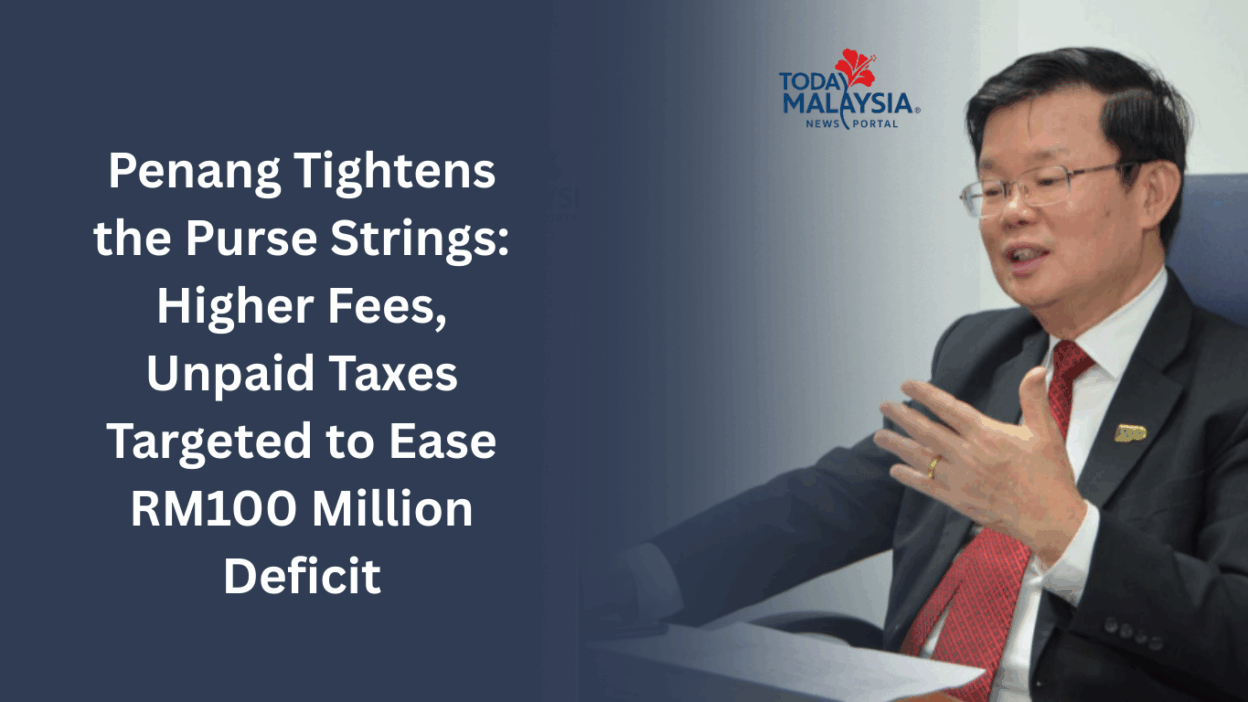
GEORGE TOWN – In a bid to stabilise its finances and ease a growing cash flow crunch, the Penang state government is stepping up recovery of unpaid taxes and raising revenue through increased fees and charges, Chief Minister Chow Kon Yeow announced.
Among the 24 strategies being rolled out are higher hotel taxes, steeper liquor licence fees, and an aggressive recovery of RM6 million in unpaid quit rent. Chow said these measures aim to counteract a budget strain driven by rising operational costs and a growing pool of eligible cash aid recipients.
“Expenses are climbing, and salaries for state civil servants have increased. We sought an advance of over RM100 million from Putrajaya last year as a buffer against a potential RM500 million deficit,” Chow told the state assembly. He added that prudent financial management has since brought the projected shortfall down to about RM100 million.
Responding to lawmakers’ concerns, Chow affirmed that the RM100 million was sufficient for current needs. “If there’s any surplus from the advance, we may return it to the federal government,” he noted.
Chow also pushed back against the perception of Penang as a wealthy state, highlighting that federal taxes generated from booming investments flow to Putrajaya—not Penang.
“All those investments you see? The taxes go straight to federal coffers. The state’s income largely depends on land sales and spillover effects from local businesses,” he explained.
Additional revenue strategies include:
- Auctioning off high-value state land
- Revising land categories and lease conversion policies to spur development
- Reviewing hotel fee structures with local and federal bodies
- Raising veterinary service charges and entertainment duties
- Evaluating plant rental fees at the Botanic Gardens
- Partnering with private firms to manage idle government quarters
Despite the financial pressure, Chow reported that Penang closed 2024 with RM1.38 billion in consolidated funds—slightly lower than the RM1.46 billion recorded in 2023. The state also narrowed its deficit to RM174 million from RM358 million the previous year, collecting RM810 million in revenue and spending RM719 million on operations, with RM265 million directed toward development.